Corporate Social Responsibility and Sustainable Development Policy 
Thachang Green Energy Public Company Limited (the “Company”) and its subsidiaries recognize and give due consideration to both the positive and negative impacts on society that may arise from the Company’s operations. The Company has therefore established this Corporate Social Responsibility and Sustainable Development Policy as a framework for conducting business while balancing the interests of stakeholders, including employees, business partners, shareholders, society, communities surrounding the power plants, and government agencies. The policy seeks to balance the impacts of the Company’s operations on its stakeholders and to support sustainable business operations, enabling the Company to grow with acceptance and support from all sectors. The Company also promotes awareness and responsible conduct among its people in support of sustainable business operations.
1. Fair Operating Practices
The Company and its subsidiaries are committed to conducting business honestly and with social responsibility, creating positive outcomes for individuals, communities, society, and the environment. The Company maintains standardized operations and effective controls, applies appropriate knowledge and professional care, and relies on sufficient and verifiable information. The Company strictly complies with applicable laws and requirements and treats customers fairly. The Company shall not solicit or accept any improper benefit from customers and shall protect confidential customer information obtained through business operations, except where disclosure is required by law.
2. Anti-Corruption
The Company is committed to lawful operations that benefit society. It supports employees of the Company and its subsidiaries in performing their duties ethically and encourages business partners to operate lawfully and transparently. To ensure effective implementation of the Anti-Corruption Policy, the Company promotes appropriate awareness, values, and attitudes at all levels, maintains checks and balances and effective internal controls, and seeks to prevent conflicts of interest and corruption.
3. Respect for Human Rights
The Company and its subsidiaries respect human rights and promote equality and equitable treatment inside and outside the organization, without discrimination based on origin, race, sex, age, color, religion, physical condition, social status, family background, or other status. The Company shall not directly or indirectly infringe individual rights and freedoms. It supports and respects the protection of human rights, seeks to prevent the Company and its subsidiaries from being involved in human rights abuses, provides employees with channels to express views or raise concerns regarding infringements of individual rights, and encourages joint ventures, business partners, and all stakeholders to follow internationally recognized human rights principles.
4. Fair Labor Practices
The Company and its subsidiaries recognize that human resources are essential to business success. Management shall treat employees fairly and without bias, support capability development, career advancement, and improved performance, and promote understanding of the Code of Conduct. The Company provides appropriate compensation and benefits to support a good quality of life, fair employment conditions, opportunities for advancement, and a safe and hygienic workplace. Employees are treated in good faith, and their views and recommendations are considered reasonably.
5. Consumer Responsibility
The Company and its subsidiaries are committed to developing products that deliver customer satisfaction and benefit. Customers are treated responsibly, honestly, and attentively, with due regard to product quality, performance, safety, applicable standards, and internationally recognized safety requirements. The Company is committed to fair marketing and provides accurate, sufficient, and non-misleading product information. Customer information is kept confidential and shall not be misused.
6. Environmental Stewardship
The Company and its subsidiaries recognize their social responsibility to protect the environment and strictly comply with applicable environmental laws in their operations and production activities.
6.1 The Company assigns responsible personnel to prevent environmental impacts from exceeding applicable standards and to optimize the use of natural resources.
6.2 The Company seeks to reduce waste generation and cooperates in the proper disposal of waste.
6.3 Before making an investment or entering into a joint venture, the Company assesses environmental, health, and safety risks and impacts. The Company conducts business with due care for environmental protection.
6.4 The Company uses natural resources, materials, and equipment efficiently and effectively.
7. Community and Social Development
The Company complies with applicable laws and regulations and acts responsibly toward society. It cooperates in, assists with, supports, and volunteers for activities that benefit communities and society, with the aim of strengthening local economies and supporting social and cultural revitalization. The Company also provides channels for stakeholders and other concerned parties to express views regarding the Company’s operations and to submit complaints concerning unfair treatment through e-mail: csr@tge.co.th
8. Innovation and the Dissemination of Innovation
The Company supports innovation in internal work processes and interorganizational collaboration. Innovation includes applying new approaches and changing ways of thinking to create value and positive change, improve productivity, and maximize benefits to society. The Company regards the communication and dissemination of innovation to stakeholder groups, both directly and indirectly through multiple communication channels, as part of its social responsibility and seeks to ensure that Company information reaches stakeholders broadly.
This policy was reviewed by Executive Committee Meeting No. 12/2022 on November 9, 2022, endorsed by Nomination, Remuneration and Corporate Governance Committee Meeting No. 5/2022 on November 11, 2022, and approved by Board of Directors Meeting No. 7/2022 on November 14, 2022.
Revision: 1 Effective Date: November 14, 2022 Document Code: TGE-Policy-011
Greenhouse Gas Management Policy
Thachang Green Energy Public Company Limited and its subsidiaries recognize the need to contribute to addressing climate change and to promote greenhouse gas management that benefits the organization, society, and the environment. The Group seeks to support the transition to a low-carbon society, respond to Thailand’s greenhouse gas reduction policy, align with government policy and international environmental agreements on climate change, and support appropriate national mitigation action. In response to Thailand’s communicated intention to reduce greenhouse gas emissions under the United Nations Framework Convention on Climate Change, the Company establishes the following policy and commitments:
- Reduce greenhouse gas emissions from electricity generation by using clean, appropriate, and efficient technologies in alignment with the long-term greenhouse gas management plan.
- Support government policies and measures for greenhouse gas management at the national and regional levels.
- During 2022–2023, begin collecting Group greenhouse gas emissions data for use as a base year in setting greenhouse gas emissions reduction targets in 2024.
- Pursue participation in the Thailand Voluntary Emission Reduction Program (T-VER).
- Promote and support energy-efficiency initiatives and the responsible use of natural resources by personnel throughout the Group.
- Promote research and development of electricity-generation technologies and innovations, including biomass, biogas, waste-to-energy, and other energy sources that do not increase greenhouse gas emissions, to support sustainable greenhouse gas reductions and climate change adaptation.
- Provide employees and organizational stakeholders with knowledge about greenhouse gas emissions reduction.
This policy was reviewed by Executive Committee Meeting No. 12/2022 on November 9, 2022, endorsed by Nomination, Remuneration and Corporate Governance Committee Meeting No. 5/2022 on November 11, 2022, and approved by Board of Directors Meeting No. 7/2022 on November 14, 2022
Revision: 1 Effective Date: November 14, 2022 Document Code: TGE-Policy-017
Sustainable Organizational Development Policy
Thachang Green Energy Public Company Limited and its subsidiaries (the “Group”) recognize the importance of good corporate governance and are committed to sustainable organizational development. The Group has established this policy in accordance with environmental, social, and governance (ESG) principles to guide business operations and strengthen governance structures and management systems, enabling stable and sustainable growth across economic, social, and environmental dimensions.
The Group places sustainable organizational development at the core of its operations and integrates related action plans to balance economic, social, and environmental considerations throughout the business value chain, support sustainable development, and deliver the greatest benefit to all stakeholder groups.
The Group pursues sustainable organizational development and shared value creation across its business value chain alongside its competitive business strategy in three areas: environmental development, social development, and economic and governance development.
1. Environmental Development
The Group conducts environmentally responsible business and gives priority to environmental impacts through the following approaches:
1.1 Optimize resource use, seek opportunities to reduce resource and energy consumption, prevent pollution, and reduce greenhouse gas emissions to lessen environmental, community, and social impacts across the business value chain.
1.2 Select machinery and production processes that minimize waste, comply with legal requirements, and continuously seek new approaches to improve environmental management and quality control in line with international standards.
1.3 Conduct business with due regard for energy conservation and environmental responsibility, create sustainable value for stakeholders, raise awareness of environmental resource stewardship, and apply innovation to ensure efficient resource use in line with international standards.
2. Social Development
The Group seeks to strengthen society and communities, develop employee skills and capabilities, create quality human capital, generate employment and livelihoods, and distribute income to communities through the following approaches:
2.1 Respect human rights and human dignity and treat employees and community members fairly and equitably, without discrimination based on race, color, religion, sex, age, nationality, gender identity, or any other status, to support a good quality of life
2.2 Protect the health and safety of Group employees and workers and avoid adverse impacts on the human rights of relevant parties. The Group gives due importance to personal data protection in accordance with applicable law.
2.3 Develop employee capabilities at all levels through evaluation systems based on Company criteria, good governance, and the Group’s development direction, while delivering value to communities and society and providing products and services that meet international standards.
2.4 Work collaboratively with communities and society to support the continued development of the Group, communities, and society.
3. Economic and Governance Development
The Group seeks to improve the quality of production and services, maximize benefits, and establish efficient standards for renewable power plant operations through the following approaches:
3.1 Conduct business in accordance with good governance principles, the Code of Conduct, and applicable policies, regulations, announcements, and orders.
3.2 Uphold integrity and transparency in business and operations and comply with laws, regulations, rules, procedures, regulatory standards, and internationally recognized standards.
3.3 Continuously improve efficiency across all business processes through innovation and technology, strengthening the Group’s potential to lead in electric power while growing sustainably alongside communities, society, and Thailand.
3.4 Promote sustainable business development with strategic partners, business partners, and stakeholders throughout the business value chain.
3.5 Give priority to compliance with the Code of Conduct and anti-corruption requirements and maintain monitoring processes to support consistent compliance and encourage relevant stakeholders to follow them.
All directors, executives, and employees of the Group are responsible for supporting, advancing, promoting, and complying with this policy and its established guidelines, thereby helping to build a stable and sustainable society in accordance with the Sufficiency Economy Philosophy.
The Group demonstrates its commitment to economic, social, and environmental sustainability through policies already issued, including the Good Corporate Governance Principles, Code of Conduct, Risk Management and Investment Policy, Corporate Social Responsibility and Environmental Policy, Anti-Corruption Policy, Internal Information Use Governance Policy, and Greenhouse Gas Emissions Reduction Policy, among others. These policies reflect the Group’s determination to achieve its sustainability and social responsibility objectives, contribute to improved quality of life and well-being, strengthen society, and support sustainable development
This policy was reviewed by Executive Committee Meeting No. 12/2022 on November 9, 2022, endorsed by Nomination, Remuneration and Corporate Governance Committee Meeting No. 5/2022 on November 11, 2022, and approved by Board of Directors Meeting No. 7/2022 on November 14, 2022.
Revision: 1 Effective Date: November 14, 2022 Document Code: TGE-Policy-018
Biodiversity Management Policy
Thachang Green Energy Public Company Limited and its subsidiaries (the “Group”) are committed to sustainable business operations grounded in environmental responsibility. The Group recognizes and promotes the protection of ecosystems and biodiversity so that natural resources can be conserved for future generations. The Group therefore establishes the following Biodiversity Management Policy as a common framework.
Scope
- Manage environmental and biodiversity matters in compliance with applicable laws, requirements, and regulations.
- Control, prevent, and reduce environmental impacts through the sustainable use of resources, the maintenance of biodiversity, and pollution prevention at source.
- Continuously promote the application of modern, efficient, and environmentally responsible innovation and technology in business operations.
- Promote community development, listen to communities and stakeholders in accordance with human rights principles, and consult directly affected stakeholders and relevant agencies when developing Company projects to reduce impacts on ecosystems.
- Communicate with executives and employees to build knowledge, understanding, and awareness of biodiversity.
- Promote the transfer of technological knowledge to relevant parties to review and improve environmental management processes and continuously enhance environmental management and quality control.
Approved by Board of Directors Meeting No. 2/2024 on May 13, 2024.
Revision: - Effective Date: November 13, 2024 Document Code: TGE-Policy-020
Guidelines for Managing Impacts on Stakeholders Across the Business Value Chain
Thachang Green Energy Public Company Limited and its subsidiaries (the “Group”) recognize the importance of relationships with key stakeholders involved in business activities from upstream to downstream. The Group is committed to creating value through its products and services in response to stakeholder expectations. It has therefore established guidelines for managing impacts on stakeholders across the business value chain to support sustainable development, balance economic, social, and environmental considerations throughout the supply chain, and deliver the greatest benefit to all stakeholder groups.
Business Value Chain Management Guidelines
1. Primary Activities
The Group’s five interconnected primary activities reflect its overall business operations and are managed as follows:
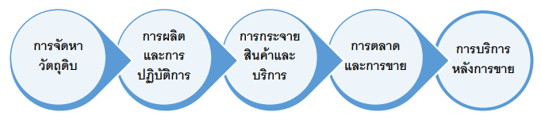
1.1 Sourcing
1.1.1 Select and procure key biomass feedstocks from multiple high-quality suppliers with environmental management practices, reducing reliance on any single supplier and strengthening industry competitiveness.
1.1.2 Use combustion chamber technology capable of accommodating high-moisture biomass fuels. This enables electricity generation from multiple feedstock types, strengthens generation capability, and reduces potential future impacts from shortages of primary feedstocks caused by climate change and competition within the industry.
1.2 Operations
1.2.1 Generate electricity using modern production systems, prevent environmental pollution, and reduce impacts on communities and the environment, with due regard for human rights, occupational health and safety, and good governance in dealings with employees and business partners.
1.2.2 Operate biomass power plants capable of using high-moisture biomass fuels, enabling efficient generation from diverse, lower-cost biomass feedstocks with reference to international standards adopted by the Group.
1.2.3 Develop and improve production processes for maximum efficiency through modern technology and effective risk management systems that control internal processes in line with established objectives.
1.2.4 Maintain offices and branches that facilitate customer and business-partner services and receive complaints and recommendations relating to safety, occupational health, and the environment.
1.3 Distribution and Service
1.3.1 Maintain internationally aligned and auditable systems to control electricity dispatch and production costs for the Provincial Electricity Authority, the principal customer. Each project has personnel responsible for production and dispatch controls and maintenance teams available to address issues around the clock, supporting efficient generation and electricity delivery.
1.4 Marketing and Sales
1.4.1 Study business opportunities involving investable renewable power projects to create sustainable business returns for relevant parties.
1.4.2 Maintain processes that respond effectively to customer needs and expectations.
1.5 After-Sales Service
1.5.1 Assign personnel to each project who can resolve issues promptly and effectively, monitor and evaluate customer satisfaction, and receive customer views and recommendations in accordance with international standards adopted by the Group.
1.5.2 Maintain processes for receiving customer complaints and recommendations promptly and effectively.
2. Support Activities For support activities help the Group’s primary activities operate continuously and efficiently:
2.1 Human Resource Management
The Group recognizes that human resources are central to all of its activities. It therefore recruits knowledgeable and capable employees, provides competitive and motivating compensation, supports continuous training and development, offers career advancement opportunities, and promotes employee care, morale, and engagement, enabling employees to contribute to the Group’s sustainable development.
2.2 Technology Development
The Group promotes innovation to transform work processes while creating benefits for communities, society, and the environment. It emphasizes the use of modern technology to maximize process efficiency.
2.3 Procurements
The Group conducts business with due regard for business ethics, transparency, and fairness to business partners. It maintains and develops relationships with partners and complies with agreed commercial terms. Procurement rules and operating manuals guide transparent procurement. Procurement activities are planned through annual project plans and budgets submitted to the Board of Directors for approval and implemented through relevant procurement and supplier evaluation working groups. The Group does not transact with business partners listed in the database of Thailand’s Anti-Money Laundering Office and complies with fair competition principles, without using dishonest methods to harm business partners or competitors.
2.4 Firm Infrastructure
The Group maintains, develops, and continuously upgrades critical business processes and systems to support rapid, accurate, reliable, and efficient development. These include information and communications technology, risk management, accounting and finance, human resource information, and internal and external communications systems.
Analysis and Assessment of Stakeholder Expectations Across the Business Value Chain
The Group comprehensively identifies, analyzes, and assesses the expectations of internal and external stakeholders connected to its business value chain. Key relationships include:
- Sourcing: business partners.
- Operations: shareholders, retail investors, executives, customers, employees, business partners, communities, and government agencies.
- Distribution and service: customers, employees, business partners, communities, and government agencies.
- Marketing and sales: customers, employees, communities, government, and government agencies.
- After-sales service: customers, communities, government, and government agencies.
- Human resource management: executives and employees.
- Technology development: executives, customers, employees, business partners, and communities.
- Procurement: executives, business partners, communities, and government agencies.
- Firm infrastructure: executives, employees, business partners, and communities.
| Stakeholder Group | Stakeholder Engagement Channels | Stakeholder Expectations | Company Response |
|---|---|---|---|
|
1. Shareholders / Retail Investors / Executives |
|
|
|
|
2. Customers External: Provincial Electricity Authority Internal: Palm oil mills, rubber plants, and Group power and fuel facilities |
|
|
|
|
3. Business Partners
|
|
|
|
|
4. Employees / Workers |
|
|
|
|
5. Communities |
|
|
|
|
6. Government / Government Agencies |
|
|
|
|
7. Banks / Financial Institutions |
|
|
|
The Group assesses stakeholder expectations at least once a year through satisfaction surveys, joint meetings, or other engagement channels to understand positive and negative impacts between the Company and its stakeholders on an ongoing basis, in accordance with relevant ESG practices and in support of comprehensive and sustainable development.
Announced on November 9, 2022